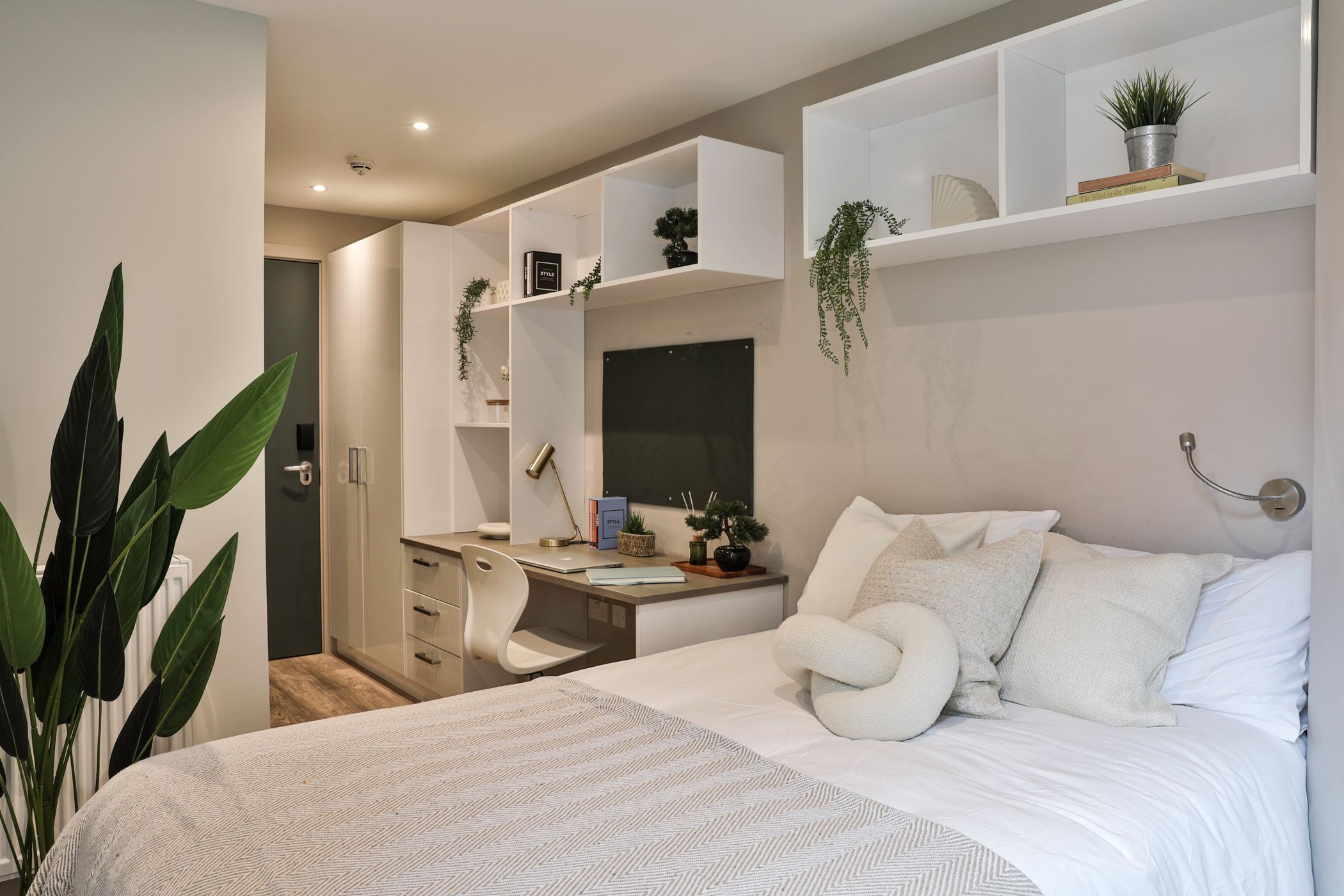
Edinburgh is one of the most expensive places in the UK to be a student, and housing is most of the reason.
But Scottish renting law is genuinely good, and it's completely different from England's. Your tenancy has no end date. You can leave whenever you like on 28 days' notice. And your landlord can't simply decide they'd rather have someone else in.
The thing to be careful about is advice written for English students, because almost none of it applies here. Scotland has its own tenancy, its own deposit rules, its own tribunal, and its own new housing act that's only partly switched on.
Here's how it actually works, and what to check before you sign anything.
Jump to:
What Edinburgh accommodation costs

Start with the number that frames everything else. Save the Student's 2026 National Student Accommodation Survey puts average student rent in Scotland at £703 a month — against a UK average of £575. That makes Scotland the second most expensive region in the country, behind only London at £793.
The cheapest verified halls in the city are at Queen Margaret
QMU publishes the clearest figures of any Edinburgh institution, and they're the lowest: £151 a week for a standard room, £184 for a premium, on a 38-week contract running 4 September 2026 to 28 May 2027. Totals are £5,738 and £6,992.
Bills are genuinely included — hot water, electricity, heating, internet and basic contents insurance.
The catch is geography. QMU's campus is at Musselburgh, east of the city, so this only makes sense if you study there.
Edinburgh Napier
Napier has three sites — Bainfield, Orwell Terrace and Slateford Road, all on the west side near the Merchiston campus.
A standard en-suite room at Bainfield on a 39-week tenancy costs £6,617.10 for the year, which works out at roughly £170 a week.
University of Edinburgh
The range runs from £3,726 a year for a single room at Nicolson Street and South College Street (self-catered, central) up to £13,457 for a single or studio at Gilmore Place.
Pollock Halls is the big catered cluster — Baird House, Chancellor's Court, Ewing House, Grant House, Holland House, John Burnett House, Lee House and Turner House. Most other properties are self-catered.
Heriot-Watt
Out at Riccarton, west of the city. Full-year contracts for 2026/27 are 40 weeks, running 5 September 2026 to 12 June 2027. Email halls@hw.ac.uk for rates.
Private halls are the expensive option here
This is where Edinburgh really diverges from other UK cities. Unite's Edinburgh properties start between £200 and £284 a week, all bills included:
Property | From | Where |
|---|---|---|
Burnet Point | £200/week | 1–4 Abbey Lane, EH8 8AG |
Burnet Court | £250/week | 1–4 Abbey Lane, EH8 8AG |
Sugarhouse Close | £253/week | 41 Holyrood Road, EH8 8FF |
The Old Printworks | £284/week | 20 Bernard Terrace, EH8 9NX |
All four sit in the Holyrood and Southside area, so you're walking to the University of Edinburgh's central campus.
But look at the comparison: Unite's cheapest Edinburgh room, at £200 a week, costs more than Queen Margaret's premium room at £184. In Coventry, private halls start under £100. Here they start at double that.
If you're choosing between university halls and a private block in Edinburgh, the university option is very likely cheaper — which is the opposite of the advice students often get.
Your tenancy has no end date
This is the most important thing on the page, and it's the opposite of how renting works in England.
If you moved in on or after 1 December 2017, you have a private residential tenancy. It is open-ended. There is no fixed term, no end date, and no point at which it automatically expires.
Leaving is easy, and entirely your call
You can end your tenancy by giving 28 days' notice, in writing — by email, by letter, or handed over in person. It has to say that you want to end the tenancy and give the exact date it will end.
Two practical details. If you're sending it by email or post, allow two extra days for it to arrive, so send it 30 days out rather than 28. And you can give notice at any time — there's no minimum period you have to stay first, and no "you signed for the year" about it.
Your landlord can agree to a shorter notice period if you ask, but they have to confirm that in writing.
For a student, this is worth real money. Going on placement, intermitting, moving in with a partner, or just not wanting to pay through a summer you're not here for — all of that is yours to decide with a month's notice.
One thing Scotland doesn't have
England introduced a student-specific eviction ground in 2026 — a route for landlords of student houses to clear them out over the summer for the next year's group.
Scotland has no equivalent in the standard eviction grounds. Your landlord has to use one of the ordinary eleven, same as any other tenant.
The new Scottish housing act, and what's actually in force
The Housing (Scotland) Act 2025 got Royal Assent in November 2025, and it's being switched on in stages. A lot of coverage talks about it as though all of it is live. It isn't.
Here's the actual position, from the commencement regulations:
When | What came into force |
|---|---|
1 April 2026 | Rent control machinery, a duty on landlords to state rent in adverts, rules on keeping pets and making changes to the property, joint tenancy provisions, and student tenancy provisions |
1 August 2026 | Social housing succession and notice rules |
6 October 2026 | Wrongful termination payments and private tenancy succession |
1 April 2027 | Rent increase caps, and the remaining joint tenancy provisions |
Two things there are worth pulling out.
Landlords now have to put the rent in the advert. That applies to ads placed on or after 1 April 2026, and it makes comparing flats much less painful than it used to be.
From 6 October 2026, wrongful termination payments apply to evictions and tenancy endings from that date. If a landlord misleads the tribunal to get you out, there's a financial consequence.
What to check before you sign
Check the landlord is registered. Scotland requires landlord registration, and a landlord without it can be evicted from their own letting business — it's also one of the eleven eviction grounds against them, not you.
Check the deposit scheme. Ask which of the three approved schemes will hold it, and get that in writing.
Refuse banned fees. Admin fees, credit check fees, key money and non-refundable holding deposits are all illegal in Scotland, and reclaimable if you've already paid.
The rent should be in the advert. Since April 2026 that's a legal duty. If it isn't there, ask why.
Don't accept "it's a 12-month contract" as final. Your private residential tenancy is open-ended whatever the paperwork implies, and you can leave on 28 days' notice.
Photograph everything on move-in day and email it to the landlord so it's timestamped.
Ask about bills, and whether there's a fair-usage cap if they're included.
Top tips
Your tenancy has no end date and you can leave on 28 days' notice — in writing, at any time, no reason needed. Send it 30 days out if you're emailing.
There is no rent cap in Scotland yet. The caps don't commence until April 2027 and no rent control area has been designated. Budget accordingly.
Scotland has no student-specific eviction ground, unlike England. Your landlord needs one of the ordinary eleven.
Your deposit can be up to two months' rent — higher than England's cap, so check the number.
Sort council tax online in your first week. If you're at any of the six partnered institutions you don't need a certificate at all.
Postgraduates writing up still count as students for council tax. Don't assume you've lost it.
Edinburgh quotes halls prices annually. Always convert before comparing with anywhere else.
Once you're settled, our guide to cheap eats in Edinburgh covers where to eat for less, and there's a list of free things to do in Edinburgh for filling weekends.
Unlock even more with Student Beans
All your favourite brands at your fingertips, from fashion and beauty to food and drink, available to college and uni students aged 16 and over. Dive into our blog to find tips and advice to help you navigate student life, from applying to uni to life after graduation.
- Sign up for a Student Beans account or log in to start saving on the biggest and best brands.
- Download the Student Beans app to unlock exclusive app-only discounts.