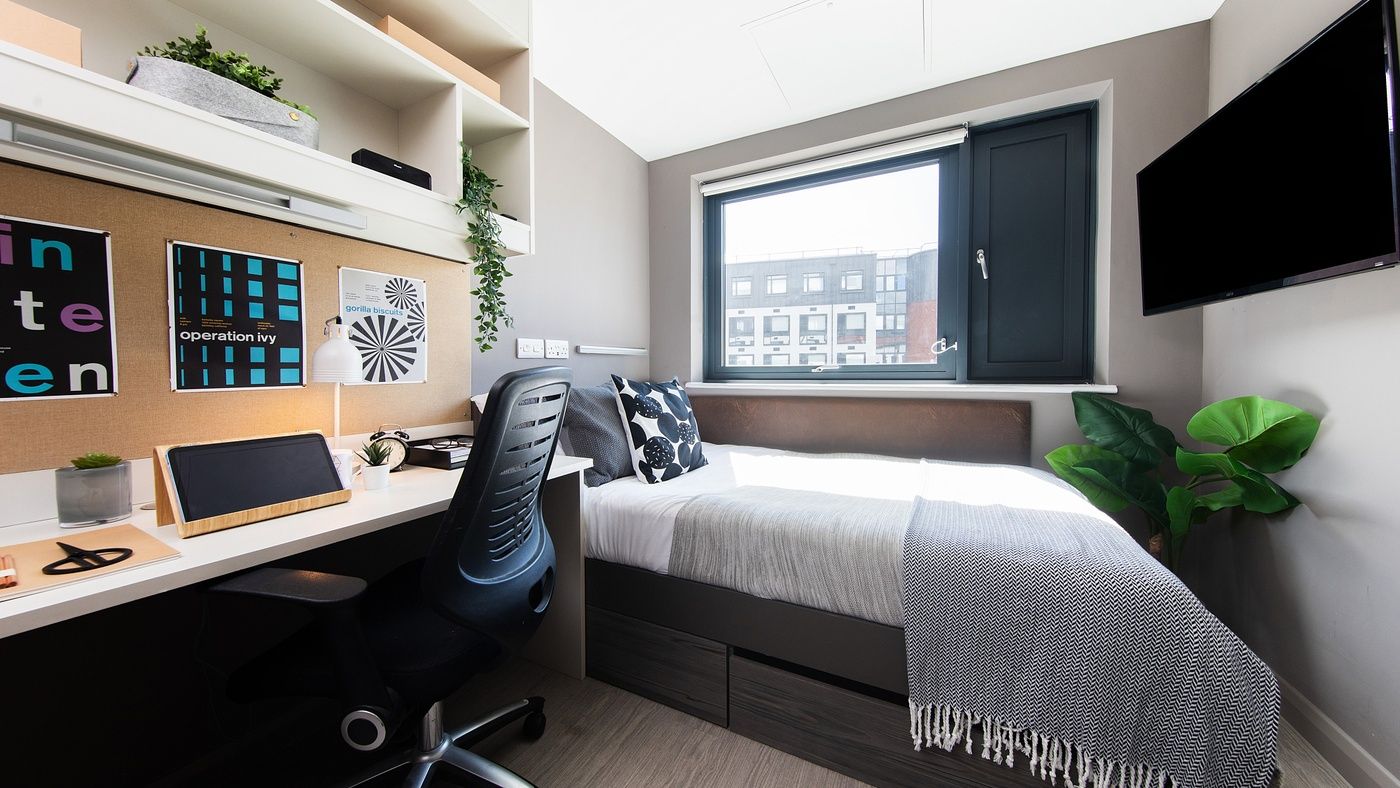
Cardiff is one of the best-value student cities in the UK. Wales has the lowest average student rent of any UK region — around £475 a month according to Save the Student's 2026 National Student Accommodation Survey, against a UK average of £575.
But the thing most guides to Cardiff get badly wrong is the law.
Wales has its own housing legislation. You're not a tenant here, you're a contract-holder. You don't have a tenancy, you have an occupation contract. Your landlord has to be on a public register you can search. And a whole list of fees that letting agents in England used to charge are simply illegal in Wales.
Here's what accommodation costs, how the areas compare, when to start looking, and the Welsh rules that are genuinely on your side.
Jump to:
How much is student accommodation in Cardiff?
A caveat first, because it matters: rent figures vary wildly depending on who's publishing them. Universities quote per week with bills in. Landlords quote per month with bills out. Comparison platforms quote their own inventory. They are not measuring the same thing.
So these are ranges, and you should confirm the current price with the provider directly.
Type | Typical cost | Bills | Contract |
|---|---|---|---|
Cardiff University halls | Around £132–£187 per week | Included | 39, 40 or 44 weeks |
Cardiff Met halls | Around £156–£225 per week | Included | 42 weeks |
Private halls (PBSA) | From around £155–£195+ per week | Included | 42–51 weeks |
Shared private house | Around £425–£600 per person per month | Usually excluded | Usually 12 months |
The bills trap
Halls and private purpose-built accommodation include electricity, water, heating and WiFi. Cardiff University's own wording is blunt: "There are no additional charges for utilities or the University provided internet network." Laundry is usually extra.
Traditional shared houses in Cathays and Roath almost always exclude bills. Cardiff University's official 2026/27 living-cost estimate puts rent at £500 a month plus £88 a month for gas, electricity, water and broadband. So budget roughly £60 to £90 each per month on top of the rent.
If a house is advertised "bills included," ask about the fair-usage cap and what happens if you go over it.
Halls vs private halls vs shared houses
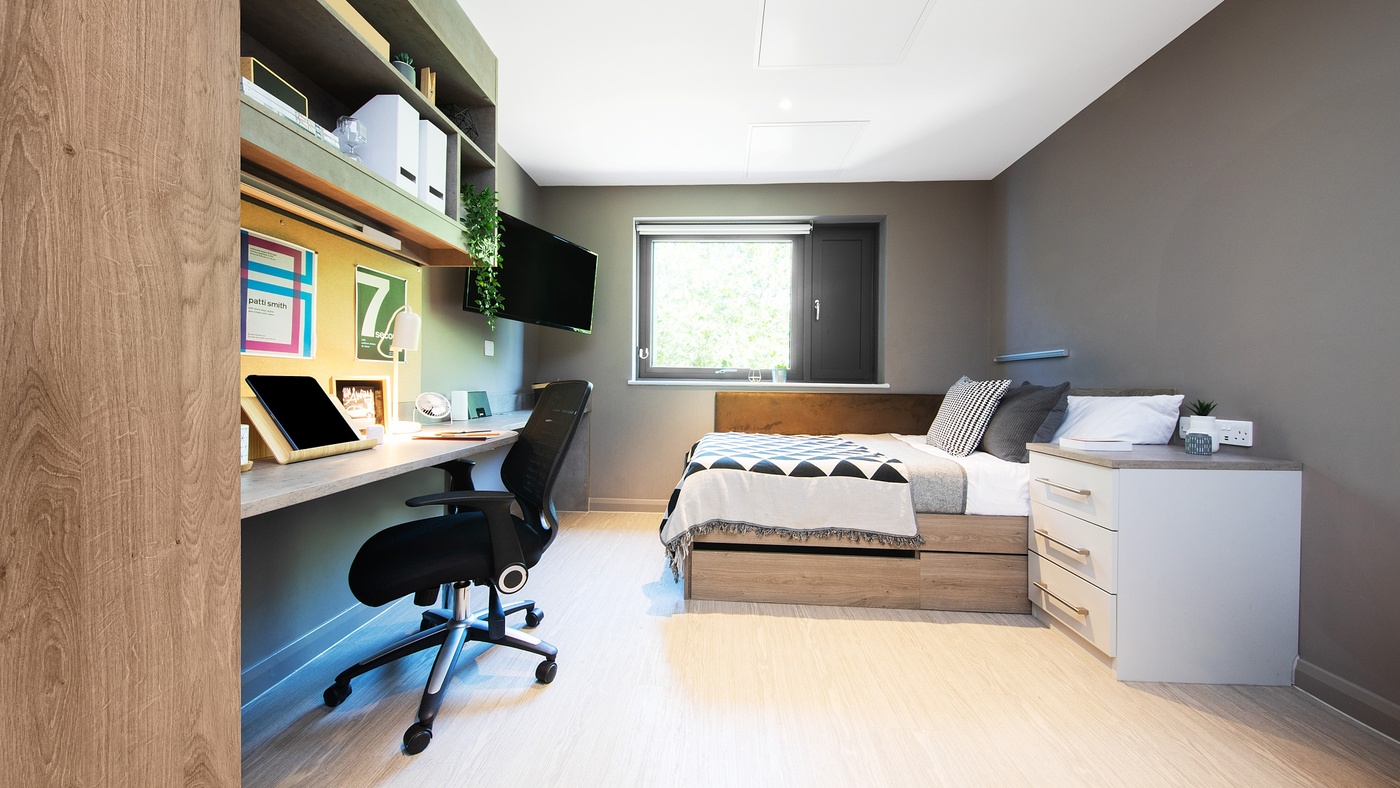
University halls
The default for first years and the simplest option.
Cardiff University halls run from around £132 a week for a shared-bathroom room in a student house up to about £187 for a part-catered en suite at Senghennydd Hall, bills included. Standard contracts run 23 September 2026 to 30 June 2027 — 39 or 40 weeks — with a 44-week option at Clodien House and a full-year option too. Rent is paid in three direct debit instalments across the year.
Cardiff Met halls at Cyncoed run from around £156 for a self-catered classic room to £225 for a catered en-suite premium, on 42-week contracts, bills and contents insurance included. Catered means breakfast and dinner seven days a week in term time. They ask for a pre-payment of roughly £130 to secure your booking.
If you're at the University of South Wales
Worth knowing early: USW doesn't own any halls in Cardiff. Its own halls are at Pontypridd and Treforest. Cardiff-campus students are placed in private halls under nomination agreements — currently Ty Pont Haearn and Zenith.
Ty Pont Haearn is a Unite building starting from around £155 a week for 2026/27 with all bills included. Zenith is listed at around £188–£195 a week on 44-week contracts.
Private halls
Mostly city centre and Cathays edge. Unite Students runs several Cardiff buildings, with 2026/27 prices starting from around £155 a week at Ty Pont Haearn, £172 at Cambrian Point, £173 at Adam Street Gardens and £175 at The Bakery — all bills included, no deposit required.
Note that "from" prices are entry-level rooms, not typical ones. Studios cost meaningfully more.
Shared private houses
What most second and third years do, and where the value is.
Expect roughly £425 to £600 per person per calendar month excluding bills. Cardiff University's SU says shared private accommodation "usually starts around £450 a month excluding bills."
The catch is the contract. Cardiff student tenancies overwhelmingly run 1 July to 30 June — a full 12 months — so you pay rent right through the summer whether you're in Cardiff or not.
When should you start looking?
For a private house
Cardiff's market moves early. The SU's own guidance is that properties for the next academic year get advertised from late October and early November — which means, in their words, "you may be signing for a property 8 months before you actually move in."
Their other line is worth repeating: "Waiting is an option, but you may find your choices will be more limited."
A realistic timeline:
Late October to early December — the best Cathays and Roath stock goes live and moves fast
January to March — still plenty of choice, and a better negotiating position
April to June — thinner, but Cardiff genuinely does still have stock
August and September — last minute; use the SU housing lists and private halls
For halls
The 2026/27 cycle is closing as this publishes. Cardiff University opened applications in February 2026, with a 24 July deadline for firm applicants and 31 August to hold an unconditional offer. Insurance applicants had a window of 13 to 19 August 2026. Late applicants are processed from 1 September on a first-come-first-served basis.
If you're offered a room, note that you have to accept within five days.
Cardiff Met typically opens applications in April with a 31 May guarantee deadline for firm first-years. USW's guarantee needed a firm choice by early May.
All three publish next year's dates on their accommodation pages — check rather than assume, but the pattern is stable.
Welsh renting law: what's different
This is the bit worth actually reading. The Renting Homes (Wales) Act 2016 came into force in December 2022 and it changed the language and the rules.
You're a contract-holder, not a tenant
Your "tenancy" is an occupation contract. Nearly every Cardiff student house is a fixed-term standard occupation contract, usually 12 months.
You must get a written statement within 14 days
Your landlord has to give you a written contract setting out your rights and obligations no later than 14 days after your occupation date. If you haven't got one, chase it in writing. It's the document you'll need if anything goes wrong.
Your rent can't go up mid-contract
On a fixed term, your landlord cannot increase the rent during the fixed term. On a periodic contract they need two months' written notice, and can only do it once in any 12-month period.
One housemate can leave without ending it for everyone
This is the genuinely useful one, and it's specific to Wales.
Joint contract-holders are each liable for the full rent — that part is as grim as you'd expect. But a joint contract-holder can withdraw from the contract without ending it for everybody else, by giving written notice to the landlord and a warning notice to the remaining housemates at the same time, with a minimum period of one month.
A replacement can be added with the landlord's consent, and that consent can't be unreasonably refused.
If someone drops out, intermits or goes on placement, this is your route out of a nightmare. It's legally fiddly though, so talk to your SU adviser before you rely on it.
Safety standards are stricter than England's
Wales requires:
Interlinked, mains-powered smoke alarms on every floor
A carbon monoxide alarm in every room with a gas appliance, in place before your occupation starts
An electrical inspection (EICR) to BS7671 at least every five years, with the report given to you within 14 days of moving in
And the line worth memorising: you are not liable for rent for any day the property is unfit for human habitation.
Letting fees banned in Wales
Under the Renting Homes (Fees etc.) (Wales) Act 2019, agents and landlords cannot charge you for: admin or set-up, signing a contract, accompanied viewings, inventories, credit checks, guarantors, check-in or check-out, changing a sharer, or renewing your contract.
They can charge: rent, a refundable security deposit, a refundable holding deposit capped at one week's rent, payments in default set out in your contract, early-termination payments, and utilities, communications, TV licence and council tax.
So if a Cardiff agent asks you for an "admin fee" or a fee to swap a housemate — that's a prohibited payment. Refuse it, and report them.
Notice periods
To leave a fixed-term contract early you need a break clause or the landlord's agreement to a surrender. On a periodic contract you give four weeks. Your landlord has to give you six months' notice under a no-fault notice, and can't serve one in the first six months — so you effectively have a year's security.
Rent Smart Wales and HMO licences
Check your landlord on the register — it takes two minutes
Wales has something England doesn't: Rent Smart Wales, a mandatory public register. Every landlord must register, and landlords who manage their own properties — plus all letting agents — must hold a licence.
You can search the free public register by property address, landlord name, agent name or registration number at rentsmart.gov.wales.
One catch worth knowing: the register covers every postal address in Wales, so finding your address on it proves nothing by itself. You need to see a registration or licence actually attached to it.
HMO licensing in Cardiff
Cardiff's rules are layered:
Mandatory licensing across the city for houses of three or more storeys with five or more occupants from separate households.
Additional licensing in Cathays, which runs until 31 January 2028 and covers houses with three or more tenants from two or more households, whatever the number of storeys.
Ask to see the licence. Cardiff SU's advice is unambiguous: if a property that should be licensed isn't, they "strongly advise against signing a contract with that landlord."
You can report an unlicensed HMO to Shared Regulatory Services on 0300 123 6696.
Council tax in Cardiff
Full-time students are exempt, but the exemption is not automatic, and this is the single most-missed job of the year.
To count as a full-time student in Cardiff, your course must last at least a calendar or academic year, require at least 24 weeks a year, and involve at least 21 hours of study, tuition or work experience a week. Under-20s on A-level-standard courses need 12 hours a week over at least three months.
You need a council tax certificate from your university registrar, submitted with Cardiff Council's student exemption form.
If you're at Cardiff University, your certificate is issued automatically within 24 hours of enrolment via SIMS Online — but as the SU puts it, "It is your responsibility to send your certificate to the Council." Nobody chases it for you, and the bill turns up regardless.
And if one person in your house isn't a full-time student, they become liable for the bill with a 25% reduction. Work out who's paying before you sign, not after.
What to check before you sign
Is the landlord or agent on the Rent Smart Wales register? Search the address and check a registration or licence is attached.
Does the house need an HMO licence, and has it got one? Ask to see it.
Are you being asked for a banned fee? Admin, referencing, contract, viewing, inventory, guarantor and change-of-sharer fees are all illegal in Wales.
Get everything in writing. Any verbal promise — new mattress, mould sorted, garden cleared — goes in the contract, signed and dated.
Check the contract length. A 1 July to 30 June contract means paying rent all summer.
Ask what happens if someone drops out, and get the landlord's position in writing.
Ask for the paperwork: gas safety certificate, EICR, EPC, HMO licence, and which deposit scheme will hold your money.
Deposit: it must be protected with TDS, mydeposits or DPS within 30 days, and you must get the prescribed information in that same window.
Look for damp. Nearly a third of students nationally reported damp last year. Check behind wardrobes, bathroom ceilings and window reveals, and view in daylight.
Don't sign on the spot. Cardiff Digs puts it plainly: "You do not have to sign on the day you decide you want to rent the house."
Where to get free help
Cardiff is unusually well served, and all of this is free.
Cardiff Student Letting — a letting agency owned and run by Cardiff University Students' Union, in the SU building on Park Place. It charges students no agency fees, and Cardiff University officially recommends it. Covers Cathays, Roath and Adamsdown. 029 2078 1525.
Cardiff SU Student Advice — housing advice, housing lists advertising vacancies and people looking to share, plus free downloadable email templates for repair requests, deposit queries and disputing deductions. 029 2078 1410.
Cardiff Digs — the joint information hub run by Cardiff Council, all three universities, South Wales Police and the local health board. The best neutral starting point in the city.
Cardiff Met SU advice — private accommodation, contracts, deposits, guarantors and council tax. suadvice@cardiffmet.ac.uk
USW Studentpad — USW's own free search, where all listed properties are Rent Smart Wales accredited.
Shelter Cymru — free, independent, Wales-specific housing advice if things go properly wrong.
Unlock even more with Student Beans
All your favourite brands at your fingertips, from fashion and beauty to food and drink, available to college and uni students aged 16 and over. Dive into our blog to find tips and advice to help you navigate student life, from applying to uni to life after graduation.
- Sign up for a Student Beans account or log in to start saving on the biggest and best brands.
- Download the Student Beans app to unlock exclusive app-only discounts.