This is a SB Verified post.
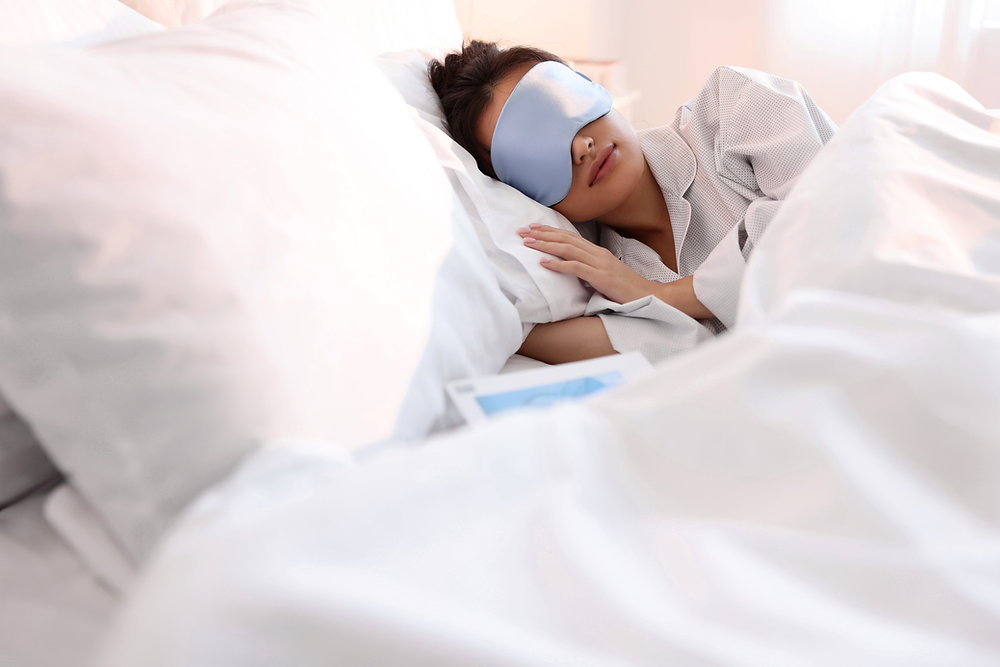
Helping to improve your sleep so you can ace your assignments.
Sleep is your best friend. No, really. You need it everyday, during tough times, and sometimes simply because you need a good snooze. It’s literally what keeps us sane and stable.
In a survey of university students from two UK universities, 46% of participants rated their sleep as ‘fairly bad’ or ‘very bad’. While those terms are subjective, it still highlights the lack of quality sleep in uni students. And no doubt it has a negative effect on academic and personal life.
There might not be a magic cure for bad sleep, but there are many ways that can help encourage better quality sleep — now disclaimer: I’m no medical professional but as a certified bad-sleeper, I have found something that has actually improved my sleep.
Drum roll please… Magnesium.
Jump to:
Magnesium for sleep
If falling asleep feels like a full-time job, magnesium might be worth adding into your sleep routine. It’s an essential mineral involved in hundreds of processes in the body — including the ones that help you relax and get proper rest.
A lot of people don’t hit their recommended magnesium intake (me included), especially with busy schedules and less-than-perfect diets (we’re looking at you, beige food era). Low levels have been linked to poorer sleep quality, which can show up as trouble falling asleep, staying asleep, or just not feeling rested.
That’s why magnesium supplements have become a go-to for anyone trying to upgrade their sleep without completely overhauling their lifestyle. You don’t just have to take supplements either, there are natural sources of magnesium you can get from your diet such as:
Spinach/leafy greens
Fish
Dark chocolate
Nuts and seeds
Wholegrains (quinoa, brown rice)
Which magnesium is best for sleep?
So, different types of magnesium do different things.
For sleep, forms like magnesium glycinate (also called bisglycinate) are usually recommended. That’s because they’re bound to glycine — an amino acid that’s associated with calming effects and can support relaxation. It’s gentle on the stomach and calms the nervous system, reducing anxiety.
Other forms, like magnesium oxide, are less easily absorbed, while magnesium citrate is more commonly used for digestion. Helpful, yes — but not exactly what you want right before bed.
So if your goal is better sleep, it’s less about “any magnesium” and more about choosing the right type.
Magnesium Glycinate 3 in 1 - bulk
If you don’t want to overthink which type of magnesium supplements to try, I’ve done all the hard work for you.
After a long time of poor sleep (read: my whole life), I needed something to try and improve it. I was waking up moody, unrested, and waking up time after time during the night (and not falling back to sleep).
I tried bulk’s Magnesium Glyncinate 3 in 1 capsules — which combines three different forms: bisglycinate, malate, and citrate. I’ve been taking these supplements every day since mid-January 2026 so I feel like I’ve given it long enough to be able to comment on the product.
2 words — it works.
I take the capsules a few hours before bed after I’ve had dinner. And what have I noticed?
I fall asleep quicker — no more hours waiting for sleep to take me, I can now fall asleep within the hour, normally much less.
I wake up less in the night —unless I need a wee (I drink a lot of water).
My mornings feel easier and lighter—I’m not a morning person, never have been and likely never will be, but after taking magnesium I find mornings easier and less groggy than before.
My deep sleep has improved—according to my FitBit, I’ve been getting more deep sleep and spending less time awake or in light-sleep.
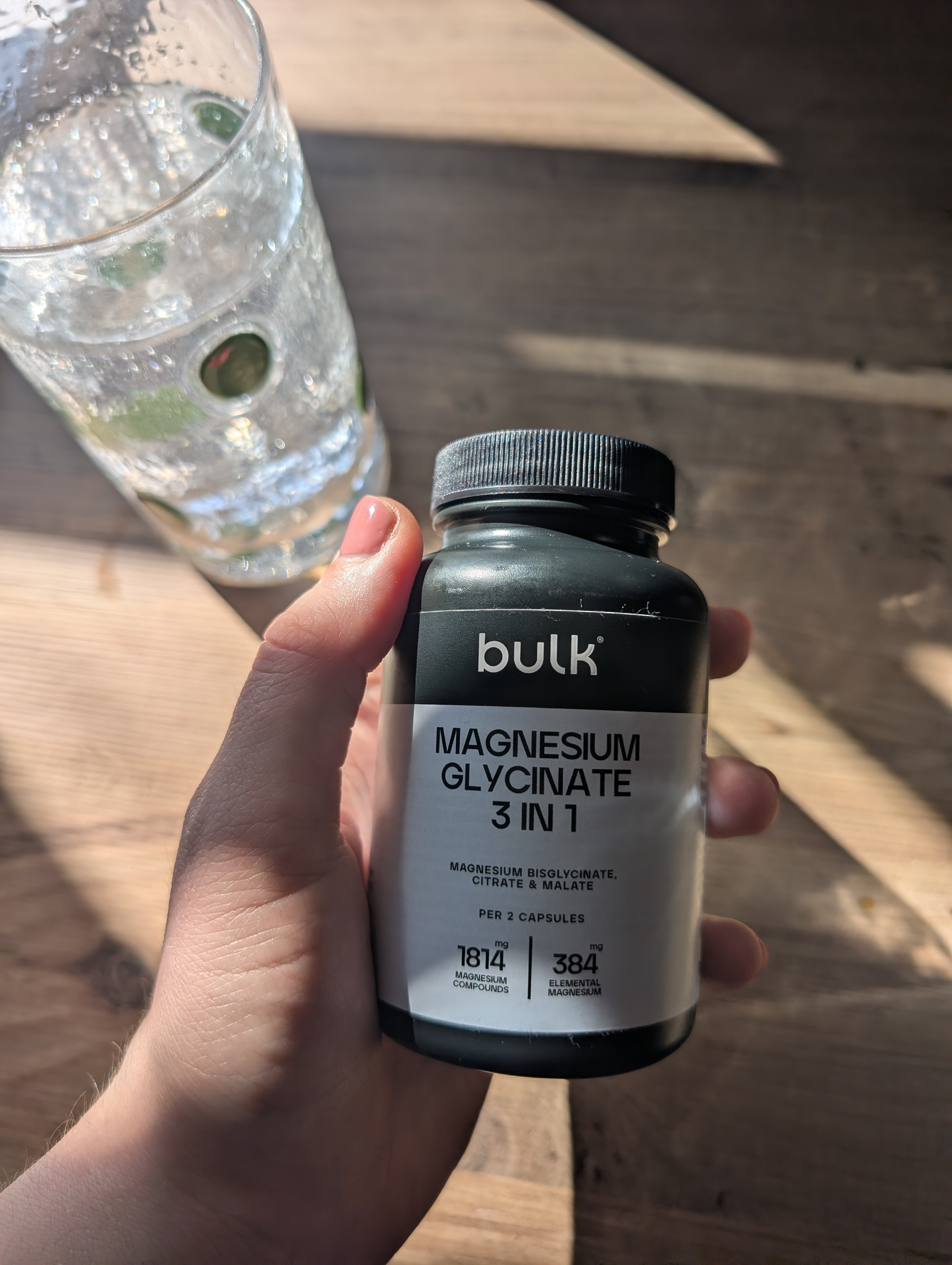
The fact that these supplements are a 3 in 1 combo, I think have helped encourage overall better sleep.
Each type does something slightly different:
Magnesium bisglycinate — known for high absorption and more calming, sleep-friendly effects
Magnesium malate — often linked to energy production and reducing fatigue
Magnesium citrate — helps with absorption and general magnesium levels
How does magnesium help you sleep?
Magnesium supports sleep in a few key ways, helping your body switch into rest mode.
It helps regulate neurotransmitters that calm the nervous system, which includes supporting the activity of GABA (gamma-aminobutyric acid) — basically your brain’s way of slowing things down.
It also plays a role in the production of melatonin, the hormone that controls your internal body clock. Balanced melatonin levels = better sleep timing and quality.
As if that wasn’t enough already, magnesium also helps relax muscles and can reduce physical tension, which is ideal if you tend to feel restless at night.
So rather than knocking you out, magnesium helps create the right conditions for sleep to happen naturally, helping you to wake up feeling less groggy.
When to take magnesium?
Magnesium isn’t instant — it works best when it becomes part of your routine and the effects will be more noticeable with consistent use.
Most people take it in the evening, around 30 to 60 minutes before bed. This lines up with your body’s natural wind-down phase and gives it time to start supporting relaxation.
Some people split their dose across the day, but if sleep is your main goal, taking it at night makes the most sense. Taking it with food (after dinner for example) can help reduce any potential stomach sensitivities.
The key thing is consistency. Like most supplements, the benefits build over time rather than happening overnight.
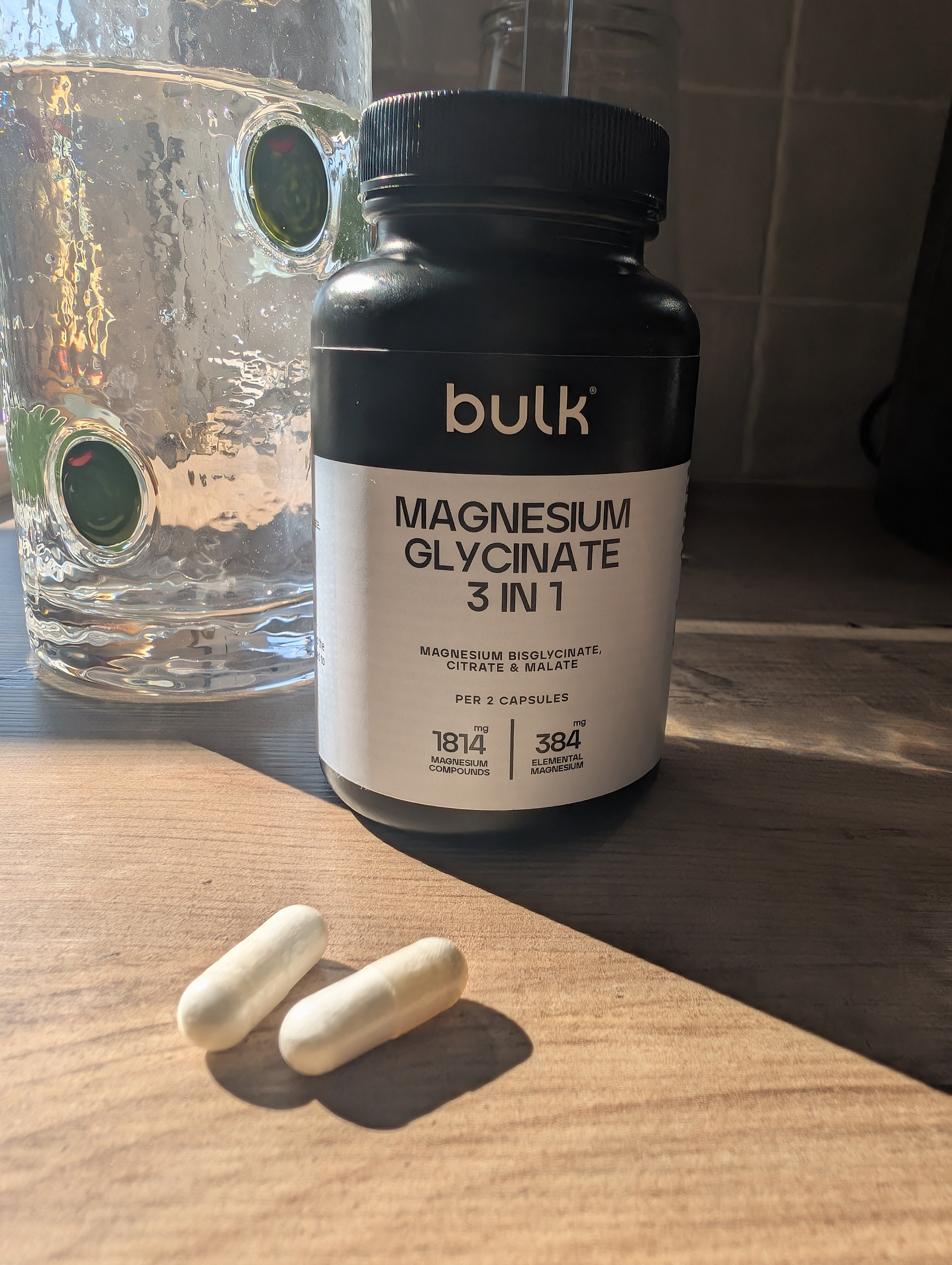
For me using bulk’s 3 in 1 capsules, I take 2 after dinner around 2-3 hours before bed and that seems to be working for me. It might differ from person to person so try a few different times to find what works best.
Magnesium bisglycinate vs glycinate
This one sounds more confusing than it actually is.
Magnesium glycinate and magnesium bisglycinate are essentially the same form. Both mean magnesium is bound to glycine, which improves absorption and adds those calming properties that we’re after.
“Bisglycinate” just refers to the chemical structure (two glycine molecules attached), but in practice, they’re used interchangeably in supplements.
The reason this form is popular? It’s well-absorbed, gentle on the stomach, and more closely linked to relaxation compared to other types. Don’t get it confused with magnesium citrate, the one that helps constipation.
Sleeping tips
Aside from magnesium glycinate, there are other ways you can try and improve your sleep.
Ideally you should try to implement a few sleep tips together, rather than just focus on one, as you’ll have a better chance of boosting your sleep hygiene that way.
If you want to actually feel the difference, try combining it with a few science-backed basics:
Stick to a consistent sleep schedule to support your body clock
Reduce blue light exposure in the evening (your phone is the main culprit)
Avoid caffeine at least 6–8 hours before bed
Keep your room cool and dark — this helps signal sleep to your brain
Build a wind-down routine to lower stress levels before bed
Empty your thoughts into a journal so you’re not ruminating all night
Maintain your bed sheet hygiene
What is SB Verified?
SB Verified — Student Beans Verified — means we’ve tried and tested the product, service, or experience that we’re writing about. We want to make sure that we’re giving you advice and reviews on what really works for your student life, whatever that may be.
SB Verified doesn’t mean it’s the best of the best, it just means we’ve tried it and deemed it useful for students. Student Beans is your student saviour, trying before you buy it. Find out more about Student Beans with our ultimate guide to all things SB.
Need more? Check out our ultimate guide to life and wellbeing as a student.
Unlock even more with Student Beans
All your favourite brands at your fingertips, from fashion and beauty to food and drink, available to college and uni students aged 16 and over. Dive into our blog to find tips and advice to help you navigate student life, from applying to uni to life after graduation.
- Sign up for a Student Beans account or log in to start saving on the biggest and best brands.
- Download the Student Beans app to unlock exclusive app-only discounts.