
What is a digital bank, and why do students love it?
A digital bank (also known as a “challenger bank”) is a bank that operates entirely online or via mobile apps. No paperwork, no queuing at a local bank branch, just typically an app, a debit card and a decision in minutes. For students, that speed matters, and so does everything else these apps are built around.
Having features such as real-time spending notifications means you actually know where your loan's gone. Separate “spaces” or “pots” keep rent and bills apart from your food budget. And for the most part, there's no extra charge for spending abroad, whether that's a term on exchange or a weekend in Berlin. Some even throw in genuinely useful extras, like cinema ticket discounts, travel insurance or phone cover, bundled into a paid plan.
We've rounded up the best digital banks for students in the UK, and the shortlist all works the same simple way.
PS - only one of the six banks below runs a dedicated “student account” the way a high-street bank might, so you might want to pair one of these with a traditional student account rather than treating it as a replacement. But for everyday spending, saving and budgeting as a student, a digital bank is hard to beat.
Check out our ultimate guide to student life for all the advice you could need.
Jump to:
How do the best digital banks for students compare?
Bank | Founded | Users | Main USPs for students |
|---|---|---|---|
2014 | 6.2 million |
| |
2015 | 15.2 million |
| |
2015 | 70 million+ globally (13 million in the UK) |
| |
2021 | 2.5 million |
| |
2022 | 190,000+ |
|
Rates, fees and customer numbers are correct as of August 2026 and might change – always check the provider's app or site before applying.
The best digital banks for students in 2026
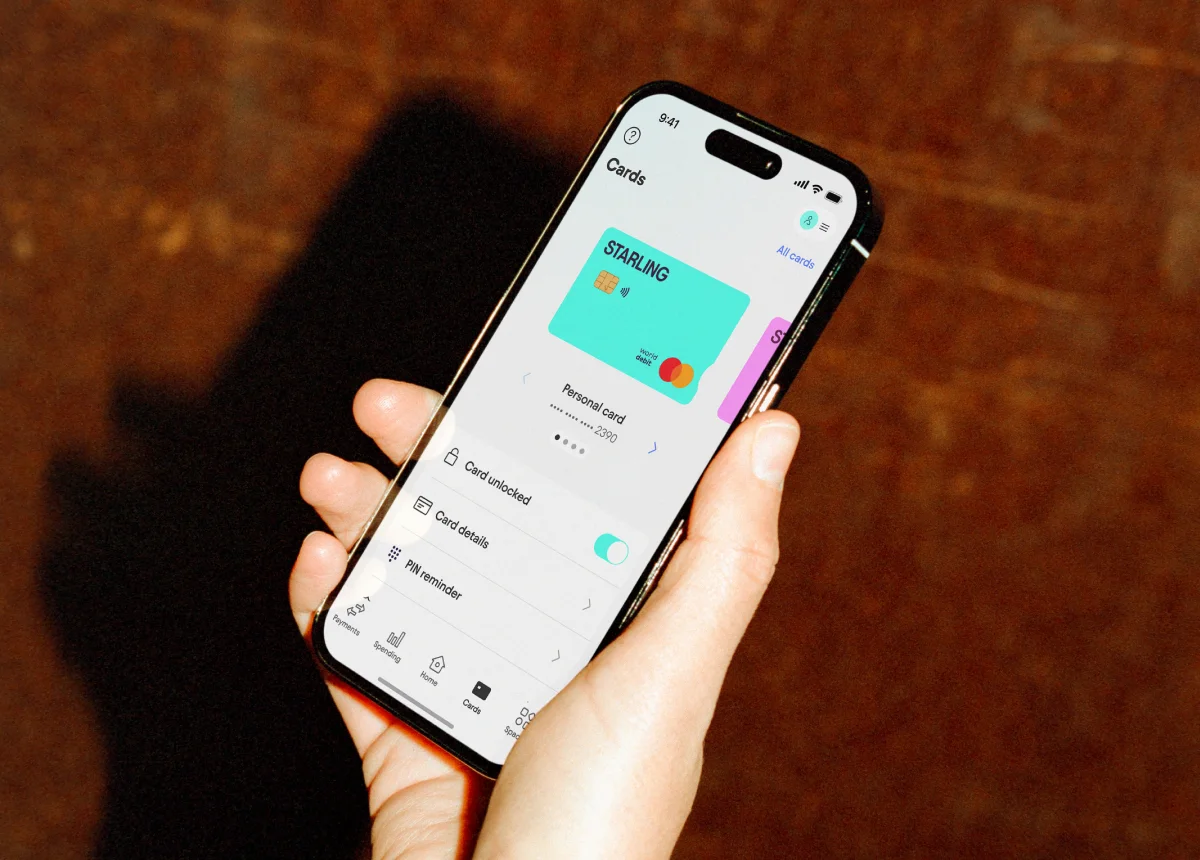
Starling Bank
Starling launched in 2014, and it's since become one of the most consistently well-reviewed current accounts around. In fact, it's topped Which?'s customer satisfaction ranking for seven years running, scoring 86% in its latest survey and is the first UK digital bank to launch a dedicated student account
The Starling everyday account has no monthly fee and no extra charges for spending or withdrawing cash abroad. That makes it a solid pick for any students considering studying abroad, or just an Interrail trip. You don't even have to convert your money; once you tap your card, it shows you exactly what's left your account in the local currency of where you're spending.
One of its standout features is Spaces: sub-accounts inside the main app where you can seperate money for rent, bills or savings goals. Also, their built-in Bills Manager pays recurring costs straight out of a dedicated Space, so they never eat into your spending money.
You can also open a joint account with a coursemate or partner if you're splitting a tenancy or household bills.
Why we rate it:
No fees on everyday spending or cash withdrawals abroad
Spaces make it easy to separate rent, bills and savings without opening five different accounts
Consistently the UK's top-rated current account provider
Get a £50 Amazon gift card when you open a Starling student account.
Monzo
Monzo launched in 2015, and with 15.2 million customers it's one of the UK's biggest digital banks. Like Starling, it scores well with reviewers. Monzo ranked joint second in Which?'s latest satisfaction survey, with 85%.
Its version of Spaces is called Pots, and it works the same way. Split your loan the moment it lands, tuck money away for a deposit or a night out, and let Salary Sorter automatically divide your income between them.
Card payments abroad are also fee-free, and cash withdrawals are free without limit across the European Economic Area (EEA) if Monzo is your main account (outside the EEA, £200 every 30 days is free, then a 3% fee applies).
Want more than the free basics? Monzo's paid Perks plan (£9 a month) throws in a railcard, weekly Greggs treats, cinema tickets and Uber One – genuinely handy if you're already going to the cinema and grabbing a coffee on the way.
Why we rate it:
Pots make splitting a loan or grant into “spend” and “don't touch” simple
Fee-free EEA cash withdrawals if it's your main account
Perks plan bundles cinema tickets and other everyday discounts for £9 a month
Revolut
Revolut launched in 2015 and has grown fast. It now has more than 70 million customers globally. Its biggest recent shift is regulatory: in March 2026, Revolut Bank UK Ltd was granted a full UK banking licence. That means eligible deposits are now protected by the FSCS up to £120,000, the same protection you'd get at any high-street bank. It's rolling out as customers get migrated across, so check in the app whether your account has moved over yet.
Revolut's appeal for students is its multi-currency setup. Hold and spend in dozens of currencies at the real exchange rate, handy if you're studying abroad or travelling with mates.
The free Standard plan gives you fee-free ATM withdrawals up to £200 a month and a 2.9% AER savings Vault. Paid plans add perks like travel insurance and airport lounge access.
One thing to flag: Which? has repeatedly raised concerns about Revolut's handling of fraud complaints compared with rivals; so it's worth being extra cautious about who you share your details or QR codes with.
Why we rate it:
Genuinely useful for multi-currency spending and travel
Now FSCS-protected following its 2026 UK banking licence
Paid plans add real perks like travel insurance and lounge access
Get a £20 welcome bonus when you open an account with Revolut.
Chase UK
Chase UK arrived in 2021, backed by US banking giant JPMorgan. It debuted in Which?'s Recommended Provider list for the first time this year, scoring 82%.
There's no monthly fee and no fees for spending abroad. Its round-up saver adds a 5% interest boost on the spare change from your purchases. The headline feature is cashback: 2% on groceries, restaurants, cafes, takeaways, transport and fuel, up to £20 a month.
Read the small print, though. From 1 July 2026, you need to make 15 or more card payments a month and keep at least £1,000 in a Chase savings account every single day of that month to qualify. That's a realistic bar for some students and a stretch for others, so weigh it up against your own balance before counting on the cashback.
Why we rate it:
No fees on everyday spending or spending abroad
Round-up saver adds a genuine interest boost, not just spare change sitting still
Cashback is decent value if you can meet the monthly conditions
Kroo
Kroo is the newest name here, and a rare thing: a UK bank built from scratch rather than spun out of an existing one. It started life as B-Social in 2016, rebranded, and won its full banking licence in 2022. There's no monthly fee, no charges for spending or withdrawing cash abroad, and 2.65% AER paid monthly on your balance, up to £500,000.
It also has genuine ethical credentials. Kroo plants a tree for every new customer, working towards a goal of one million. By its most recent public figures, it had passed 190,000 customers and £1 billion in deposits. Worth knowing it's smaller and newer than the other four, so its app, support and brand recognition are still catching up.
Why we rate it:
No fees on everyday spending or cash withdrawals abroad
2.65% AER paid monthly, with no minimum balance or complicated tiers
A genuine ethical angle, with a tree planted for every new customer
What are the benefits of digital banking for students?
The obvious one is speed and convenience. You can open an account, freeze a lost card or check your balance without ever leaving your room. Real-time spending notifications mean you actually see the £4.50 leave your account for a coffee, rather than finding out three weeks later when you check your statement.
Budgeting tools are the other big win. Spaces, Pots and Jars all do roughly the same job: they let you separate “spend” money from “don't touch” money, without opening five different accounts at five different banks. Pair one with a proper budgeting routine and it's genuinely one of the easier ways to make a loan or grant last the full term.
Then there's the money you save just by not paying to spend your own money. Think no fees for card payments abroad, better exchange rates than a high-street debit card, and – on some accounts – interest paid on the balance you're not spending yet. Add in occasional perks like cinema discounts, travel insurance or lounge access on paid plans, and a digital bank can end up paying for itself.
Are there any downsides to digital-only banks?
A few things are worth knowing before you switch everything over. None of these six offer an interest-free overdraft the way a traditional student account does. If you rely on one to cover you at the end of term, keep a separate student account for that specific job instead.
Cash deposits are limited or unavailable on several of these accounts, which is a genuine inconvenience if you're regularly paid in cash from a part-time job. There's no branch to walk into if something goes wrong. Everything happens through in-app chat, which usually works fine but can feel slower when you need an answer immediately. Protection varies too: Starling, Monzo, Revolut and Chase are all covered by the FSCS up to £120,000 (Revolut as of its March 2026 banking licence). Wise and Monese are e-money institutions whose funds are safeguarded rather than FSCS-protected. Both are regulated by the FCA, but it's a different kind of protection if the company were ever to fail.
Finally, cashback and top-tier perks often come with conditions attached. Chase's cashback now requires a minimum savings balance and a set number of monthly transactions, for example, so check you'll actually meet them before factoring the reward into your budget. If money's tight enough that any of this feels stressful rather than useful, there's support available beyond just picking the right app.
Digital banking FAQs for students
What's the difference between digital, mobile and online banking?
They get used interchangeably, but they're not quite the same thing. Digital banking is the umbrella term: any traditional banking product or process that's moved online, whether that's through an app or a website. Mobile banking is more specific. It's doing your banking entirely through your bank's app, from everyday spending to opening new products, and both digital-only and high-street banks can offer one. Online banking is narrower still. It's managing your account through a website, and usually only covers the basics: checking your balance, paying bills and reviewing transactions.
Are digital banks safe?
Yes. Starling, Monzo, Revolut, Chase UK and Kroo are all covered by the FSCS up to £120,000 per person, per institution. That's the same scheme that protects money at any UK high-street bank, and it applies whether you're banking entirely through an app or not.
Can students open a digital bank account?
Yes! Most of these accounts are open to anyone aged 16 or 18 and over who's a UK resident. You'll typically need photo ID and a UK mobile number to sign up. Outside Starling's dedicated student account, none require you to be in full-time education, so there's no separate “student” application process. You apply the same way anyone else would.
Do any of these have a proper student account with an interest-free overdraft?
Yes, now. Starling launched the UK's first digital-bank student account in August 2026, with a £500 interest-free overdraft for eligible students. None of the other four run a dedicated student account, so if a 0% overdraft is essential and Starling isn't the right fit, open a traditional student bank account alongside a digital bank instead.
Which digital bank is best for spending abroad as a student?
Starling, Chase UK and Kroo are all fee-free for spending and cash withdrawals abroad on their standard accounts, without needing to hold multiple currencies. Any of the three is a solid pick for a term abroad or frequent travel.
Can I have a digital bank account and a normal bank account at the same time?
Yes, and plenty of students do exactly that. They use a digital bank for everyday spending and budgeting, alongside a traditional account for a student overdraft or for receiving a maintenance loan. There's no limit on how many current accounts you can hold at once
Sorting your banking is one less thing to think about at university – and signing up to Student Beans is another. It's free, and it gets you discounts on the everyday stuff your student loan actually needs to stretch to cover.
Unlock even more with Student Beans
All your favourite brands at your fingertips, from fashion and beauty to food and drink, available to college and uni students aged 16 and over. Dive into our blog to find tips and advice to help you navigate student life, from applying to uni to life after graduation.
- Sign up for a Student Beans account or log in to start saving on the biggest and best brands.
- Download the Student Beans app to unlock exclusive app-only discounts.